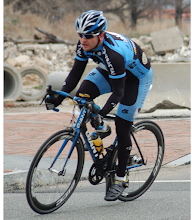
It's no secret that I'm a bit competitive. Recently, I took part in a different kind of competition.
I was in a weight loss competition.
My office had a weight loss competition in which 24 people participated. Each one of us paid $10 and the money was paid out to the three people who lost the highest percentage of their body weight over a 10 week period.
Of course, some people stayed the same. Some people gained weight. Some people lost a whole bunch in the first few weeks. Others did not officially weigh in, so no one knew how they were doing.
I was doing the slow-and-steady loss (with a slight slip for vacation).
In the end, I lost 5.6% of my body weight, or about 10 1/2 pounds. That was enough to finish in 3rd place. The winner lost 9.6% of her body weight and the second place person lost 7.6%. When it started, I figured I was planning to lose the weight anyway, so why not see if I could make some money doing it? It worked (for a princely sum of $48).
As of today, I'm 178.6 and 19.2% body fat. I had mentioned before that I could make it to 177 before I go to the conference in two weeks, and now I think it's almost a certainty.
How low can I go? I don't know. Since I'm sticking to the 12-week at a time strategy, it's hard to say.
I'd like to be 170 for my 39th birthday at the end of January. I might even like to be in the lower 160's by racing season. If I could stay in the 168 to 172 range, which I have often fondly referred to as my "skating weight", I'd be really happy. Even better, if I could stay at that weight for a full year until I turn 40, then I would have built the habits to stay at that weight.
I can't imagine a better 40th birthday present to myself than being really fit when I turn 40.
PS: I also set two new personal best power numbers:
Best 5:00 329 watts
Best 10:00 306 watts
Saturday, November 10, 2012
Sunday, November 4, 2012
Forced Recovery
This week's training plan didn't exactly work out.
Monday is normally my day off. Tuesday we didn't have power due to the hurricane. Late Tuesday, I started coughing.
Wednesday I was still coughing. I tried to get a workout that morning and my heart rate was running VERY high.
Thursday and Friday I took off from the bike and from work. I felt terrible.
Saturday, I got on the trainer and felt a little better. I still kept it relatively easy. Today I did a little more normal Sunday workout, which is to say still pretty easy but for two hours.
So, I pretty much did a recovery week when I had not planned on it. As a consequence, I'll do the planned workouts from last week this week instead.
Surprisingly, I lost a good bit of weight this week. As of this morning, I'm 179.8 pounds and 20.3% body fat. Even though I was sick and barely training, I kept a close eye on what I ate and it still worked out pretty well.
Monday is normally my day off. Tuesday we didn't have power due to the hurricane. Late Tuesday, I started coughing.
Wednesday I was still coughing. I tried to get a workout that morning and my heart rate was running VERY high.
Thursday and Friday I took off from the bike and from work. I felt terrible.
Saturday, I got on the trainer and felt a little better. I still kept it relatively easy. Today I did a little more normal Sunday workout, which is to say still pretty easy but for two hours.
So, I pretty much did a recovery week when I had not planned on it. As a consequence, I'll do the planned workouts from last week this week instead.
Surprisingly, I lost a good bit of weight this week. As of this morning, I'm 179.8 pounds and 20.3% body fat. Even though I was sick and barely training, I kept a close eye on what I ate and it still worked out pretty well.


Saturday, October 27, 2012
On Track New School
My weight loss project is very much on track. When I left for vacation, I was at 183. When I got back two weeks ago, I was at 184.6. Today I am at 182 pounds (and 20.3% body fat).
At the rate I'm going, I could be as low as 177 before I go to the conference at the end of November.
I'm also trying something new in my training program. For ages, cyclists have spent this time of year doing "base" training, just riding long miles at an easy pace. I'm taking a new approach advocated by cycling coach Hunter Allen. I'm doing VO2 max training, which is far from easy.
The theory is that functional threshold power (FTP) is a percentage of VO2 power. If I can raise my VO2 power, then I can also increase my FTP.
The workouts go something like this:
I also like that in a single 8-minute interval, I can burn 160 calories (plus more in the recovery, warmup, and cool down).
It's kind of an experiment to see how things go. Hopefully it will go well.
At the rate I'm going, I could be as low as 177 before I go to the conference at the end of November.
I'm also trying something new in my training program. For ages, cyclists have spent this time of year doing "base" training, just riding long miles at an easy pace. I'm taking a new approach advocated by cycling coach Hunter Allen. I'm doing VO2 max training, which is far from easy.
The theory is that functional threshold power (FTP) is a percentage of VO2 power. If I can raise my VO2 power, then I can also increase my FTP.
The workouts go something like this:
- 8 minute intervals at the highest pace that I can sustain for the entire time
- I use 90% of my 8-minute best. My 8-minute best power is 311 watts, so I'm aiming for around 280 to 290 watts.
- 7 minutes easy pedaling (which gives me a nice 15-minute block)
- repeat until I cannot maintain the power anymore
I also like that in a single 8-minute interval, I can burn 160 calories (plus more in the recovery, warmup, and cool down).
It's kind of an experiment to see how things go. Hopefully it will go well.
Saturday, October 20, 2012
The Next Six
Now that I'm back from vacation, I have six weeks before I have a week-long conference for work.
I'm starting off the new season a couple pounds heavier since I are pretty much everything in sight while I was in Rhode Island, and there were two fudge shops and a cupcake store within a few blocks of the hotel.
My goals for the next six weeks are pretty simple:
The bigger challenge will probably be the training. As it gets colder out, I struggle more with getting out of bed when it's cold in the apartment and completely dark out and with riding outside when it's colder. I did pretty well last fall, so I'm hoping I can do it again this year.
I'm starting off the new season a couple pounds heavier since I are pretty much everything in sight while I was in Rhode Island, and there were two fudge shops and a cupcake store within a few blocks of the hotel.
My goals for the next six weeks are pretty simple:
- Lose six more pounds. That should put me at 179 pounds before I leave for the conference.
- Keep my functional threshold power up. I'm at 250 watts right now and I don't want to lose any of it.
The bigger challenge will probably be the training. As it gets colder out, I struggle more with getting out of bed when it's cold in the apartment and completely dark out and with riding outside when it's colder. I did pretty well last fall, so I'm hoping I can do it again this year.
Saturday, October 6, 2012
Looking Back
Numerically, 2012 was a good season.
I lost 10 pounds. I set several new power records for myself. My 1:00, 3:00, 5:00, 8:00 and 20:00 power numbers are all 10% higher than they ever were before. I started training with GPS and set a few course bests.
The weird part is that I did all of that in just the last 12 weeks.Up until then, the year had its highs and lows.
The first 4 months of the "off season" went pretty well. I was training regularly, maintaining my threshold power, and building up my leg strength and pedaling efficiency. I was starting to see signs of my threshold improving and I was getting close to my best sprint power.
Then I broke my nose. I couldn't really train for a week until the swelling went down, and then I got a sinus infection that kept my training to a minimum. After nearly a month off, I started rebuilding.
A month after that, I wrenched my back. I took a few weeks off, let myself heal a bit, then started up too hard and hurt my back again.
This time I took a month or two of nothing but easy riding. My motivation was gone and I just had no desire to train at all.
In June, my motivation came back as mysteriously as as it had gone. I was training seriously, with both a plan and a purpose.
I think next season I'm going to plan my training and goals in smaller blocks, probably of 8 to 12 weeks. That might mean not even picking my "A" races until the spring, when I can say what skills and strengths I've cultivated over the winter.
We'll see how it goes!
I lost 10 pounds. I set several new power records for myself. My 1:00, 3:00, 5:00, 8:00 and 20:00 power numbers are all 10% higher than they ever were before. I started training with GPS and set a few course bests.
The weird part is that I did all of that in just the last 12 weeks.Up until then, the year had its highs and lows.
The first 4 months of the "off season" went pretty well. I was training regularly, maintaining my threshold power, and building up my leg strength and pedaling efficiency. I was starting to see signs of my threshold improving and I was getting close to my best sprint power.
Then I broke my nose. I couldn't really train for a week until the swelling went down, and then I got a sinus infection that kept my training to a minimum. After nearly a month off, I started rebuilding.
A month after that, I wrenched my back. I took a few weeks off, let myself heal a bit, then started up too hard and hurt my back again.
This time I took a month or two of nothing but easy riding. My motivation was gone and I just had no desire to train at all.
In June, my motivation came back as mysteriously as as it had gone. I was training seriously, with both a plan and a purpose.
I think next season I'm going to plan my training and goals in smaller blocks, probably of 8 to 12 weeks. That might mean not even picking my "A" races until the spring, when I can say what skills and strengths I've cultivated over the winter.
We'll see how it goes!
Monday, September 24, 2012
More Than Just Maps
A few years ago, I made the switch from tracking the intensity on my bike with heart rate to tracking it with power. It meant learning a whole new series of terms and training methods which were much more specific and exact than anything heart rate had to offer. It gave me new ways to plan my training, track my results, and make sure that I was getting enough recovery between workouts (and hard weeks).
It was more efficient and effective in almost every way I could want.
In the last month, I've started training with GPS. It's not a replacement for training with power in any way. Instead, it's giving me another way to look at my training. It combines three pieces of information:
Training with power requires a power meter and software to analyze the data, so it can get a bit expensive. All training with GPS requires is a modern smart phone. Of course, with GPS-enabled bike computers, you can also track you speed, heart rate and power as well as the mapping data.
There are quite a few benefits to training with a GPS.
First, cyclists are seriously competitive. Seeing that someone else did better on a road that I thought I did well on gives me an incentive to try to beat them, especially if it's a road that I ride a lot and feel that I should be the best rider on it. The system tracks all of the roads on which you have the best time and notifies you any time someone beats you. For me, I've found a tendency towards short steep climbs (less than 4 minutes) or longer, flatter segments (about 5 minutes or so).
Second, it captures the performance data of everyone who rides on each segment. I don't just see their speed. I see how much power it took them to get it. Now I have something to aim for.
Third, it lets me compare against my own previous times. It shows me every time that I've ridden that segment (with a GPS-enabled device) and how my performances compare. Before long, you start to see the patterns of how you do when you are just cruising along vs. how you do when you are really pushing.
Last, and perhaps best, you can browse a map to find segments that others have marked. It gives you ideas of places to ride near the areas that you already ride so you can try out new and different roads (and of course, have a target speed/time on them!!)
Would I train with GPS and not power? Not if I could help it. I look at GPS as a great supplement to power, not as a replacement.
It was more efficient and effective in almost every way I could want.
In the last month, I've started training with GPS. It's not a replacement for training with power in any way. Instead, it's giving me another way to look at my training. It combines three pieces of information:
- Where I ride
- Segments of road that someone has marked as being worth tracking
- My performance on that segment (both against others and against myself)
Training with power requires a power meter and software to analyze the data, so it can get a bit expensive. All training with GPS requires is a modern smart phone. Of course, with GPS-enabled bike computers, you can also track you speed, heart rate and power as well as the mapping data.
There are quite a few benefits to training with a GPS.
First, cyclists are seriously competitive. Seeing that someone else did better on a road that I thought I did well on gives me an incentive to try to beat them, especially if it's a road that I ride a lot and feel that I should be the best rider on it. The system tracks all of the roads on which you have the best time and notifies you any time someone beats you. For me, I've found a tendency towards short steep climbs (less than 4 minutes) or longer, flatter segments (about 5 minutes or so).
Second, it captures the performance data of everyone who rides on each segment. I don't just see their speed. I see how much power it took them to get it. Now I have something to aim for.
Third, it lets me compare against my own previous times. It shows me every time that I've ridden that segment (with a GPS-enabled device) and how my performances compare. Before long, you start to see the patterns of how you do when you are just cruising along vs. how you do when you are really pushing.
Last, and perhaps best, you can browse a map to find segments that others have marked. It gives you ideas of places to ride near the areas that you already ride so you can try out new and different roads (and of course, have a target speed/time on them!!)
Would I train with GPS and not power? Not if I could help it. I look at GPS as a great supplement to power, not as a replacement.
Wednesday, September 5, 2012
Deep Blue, Take Two
Now that I'm done complaining about how humid it was, let's take another look at that race and my preparation.
In early June, I didn't care about racing. I was riding enough to have fun, but no serious training, no hard efforts, and no structure to what I was doing. At the end of June, the switch in my head flipped to "on" and I started training for real.
I did 9 weeks of solid, structured training, with volume increased, the intensity increased, and an experimental 10-day taper so that I showed up for the race both well trained and well rested.
I did a "dry run" two days in advance to make sure that all of my equipment was ready to go.
I had my traditional Indian for dinner the night before the race and got a good night's sleep.
I got to the race an hour early and got in a good warmup. I spent 45 minutes on the trainer with a dedicated warmup, then spent 15 minutes on the road. I brought a spare jersey to wear on the trainer so I could race in a dry outfit and be more comfortable.
To counter against the humidity, I drank a lot of fluids before the race. I drank 2 bottles in the hour before the race.
I started the race well, getting a strong start for the first minute and then gradually settled into the power that I wanted. I just forgot to account for the humidity.
Even though the weather did not cooperate, I feel that the factors that I could control all went perfectly.
In early June, I didn't care about racing. I was riding enough to have fun, but no serious training, no hard efforts, and no structure to what I was doing. At the end of June, the switch in my head flipped to "on" and I started training for real.
I did 9 weeks of solid, structured training, with volume increased, the intensity increased, and an experimental 10-day taper so that I showed up for the race both well trained and well rested.
I did a "dry run" two days in advance to make sure that all of my equipment was ready to go.
I had my traditional Indian for dinner the night before the race and got a good night's sleep.
I got to the race an hour early and got in a good warmup. I spent 45 minutes on the trainer with a dedicated warmup, then spent 15 minutes on the road. I brought a spare jersey to wear on the trainer so I could race in a dry outfit and be more comfortable.
To counter against the humidity, I drank a lot of fluids before the race. I drank 2 bottles in the hour before the race.
I started the race well, getting a strong start for the first minute and then gradually settled into the power that I wanted. I just forgot to account for the humidity.
Even though the weather did not cooperate, I feel that the factors that I could control all went perfectly.
Sunday, September 2, 2012
Like Breathing Through a Wet Sock
I don't deal well with high humidity. I never have. Heat I'm OK with. Not humidity.
Early this week, I saw that it was going to be hot and humid for this race, so I decided to race in my normal road gear. My time trial helmet has almost no vents and my time trial speed suit does not breathe very well, so I figured I would be better off using my standard road outfit and helmet. I was not racing for the podium today anyway.
I also decided to use my road bike, not my time trial bike. It usually takes me 4 to 6 weeks of riding on the TT bike to get comfortable on it and get my power output close to that of my road bike. While I've been training like a lunatic for the last 8 weeks, it has only minimally been on the TT bike.
I was right to plan for this. At the start, it was 78 degrees with a dew point of 72. Really humid and disgusting.
The race was OK. It is a mostly flat 10.9 mile course with a 3/4 mile climb at one end right before the turnaround. It's got several little climbs for bridges that go over streams, but they are more notable for their bone-jarring offset in the pavement than they are for their vertical climb.
I was really happy with my pacing. I started off hard for the first minute, then settled into my goal power of 250 watts (which was based off a 30-minute test on the trainer two weeks ago). Unfortunately, I forgot to account for the humidity.
About 4 miles out, I could barely breathe. I was inhaling as much as I could, but it felt like nothing was coming in. The humidity had caught up with me. I tried dropping my power, first to 245 and then to 240 and finally to 235. I still could barely breathe and my heart rate was still climbing. Of course, this was right as I hit the hill, so I was working pretty hard to get over that.
Then I hit the turnaround. The crosswinds that were little more than a nuisance on the way out were now really in my face. Nothing like a stiff headwind while trying to make up speed on the descent.
The turn where I almost hit an SUV gave me no problems this year, Of course, having my road bike (which is far more maneuverable) helped. I barely touched the brakes diving through that turn.
When I came through the last curve and saw the finish line, I got out of the saddle and gave it all that I had left, which was really not much.
I finished in just a hair over 30 minutes, giving me an average speed of 22 mph and an average power of 240 watts.
For as much as I struggled on the course, it's not that bad.
On the plus side, we got a few good pictures :-)
Early this week, I saw that it was going to be hot and humid for this race, so I decided to race in my normal road gear. My time trial helmet has almost no vents and my time trial speed suit does not breathe very well, so I figured I would be better off using my standard road outfit and helmet. I was not racing for the podium today anyway.
I also decided to use my road bike, not my time trial bike. It usually takes me 4 to 6 weeks of riding on the TT bike to get comfortable on it and get my power output close to that of my road bike. While I've been training like a lunatic for the last 8 weeks, it has only minimally been on the TT bike.
I was right to plan for this. At the start, it was 78 degrees with a dew point of 72. Really humid and disgusting.
The race was OK. It is a mostly flat 10.9 mile course with a 3/4 mile climb at one end right before the turnaround. It's got several little climbs for bridges that go over streams, but they are more notable for their bone-jarring offset in the pavement than they are for their vertical climb.
I was really happy with my pacing. I started off hard for the first minute, then settled into my goal power of 250 watts (which was based off a 30-minute test on the trainer two weeks ago). Unfortunately, I forgot to account for the humidity.
About 4 miles out, I could barely breathe. I was inhaling as much as I could, but it felt like nothing was coming in. The humidity had caught up with me. I tried dropping my power, first to 245 and then to 240 and finally to 235. I still could barely breathe and my heart rate was still climbing. Of course, this was right as I hit the hill, so I was working pretty hard to get over that.
Then I hit the turnaround. The crosswinds that were little more than a nuisance on the way out were now really in my face. Nothing like a stiff headwind while trying to make up speed on the descent.
The turn where I almost hit an SUV gave me no problems this year, Of course, having my road bike (which is far more maneuverable) helped. I barely touched the brakes diving through that turn.
When I came through the last curve and saw the finish line, I got out of the saddle and gave it all that I had left, which was really not much.
I finished in just a hair over 30 minutes, giving me an average speed of 22 mph and an average power of 240 watts.
For as much as I struggled on the course, it's not that bad.
On the plus side, we got a few good pictures :-)
Wednesday, August 22, 2012
Running on Fumes
As I've said, I really cranked up the intensity over the last few weeks.
Since June 25, I've had one thought on my mind: Deep Blue 20K time trial. I've been training like a lunatic for it non-stop.
As of yesterday, I've lost 5 pounds in those 8 weeks, putting me at 189.4. It's not a lot of weight to lose for that time frame, but I had to eat a lot just to keep my performance up.
My plan was to train up until today, then start to taper for the race, which is in 10 days. That plan worked out perfectly. This morning on the trainer, on my last interval, my body just stopped. My legs were exhausted, I could barely turn the pedals, and I was ready to call it a day. Just in time.
For the next 10 days, I'll be alternating very easy days with some moderately intense days, trying to let my body rest without losing any of the hard-won fitness.
For the power.data guys, this is my performance chart from the last month:

I'm ready for some rest and a great race day!!
Since June 25, I've had one thought on my mind: Deep Blue 20K time trial. I've been training like a lunatic for it non-stop.
As of yesterday, I've lost 5 pounds in those 8 weeks, putting me at 189.4. It's not a lot of weight to lose for that time frame, but I had to eat a lot just to keep my performance up.
My plan was to train up until today, then start to taper for the race, which is in 10 days. That plan worked out perfectly. This morning on the trainer, on my last interval, my body just stopped. My legs were exhausted, I could barely turn the pedals, and I was ready to call it a day. Just in time.
For the next 10 days, I'll be alternating very easy days with some moderately intense days, trying to let my body rest without losing any of the hard-won fitness.
For the power.data guys, this is my performance chart from the last month:
I'm ready for some rest and a great race day!!
Sunday, August 12, 2012
Turning up the Heat
Last month, I dramatically increased my training volume, going from about 4 hours a week on the bike to 9 to 10 hours a week. This month, I've stayed around 9 hours a week, but I'm riding much more intensely.
Before, I was doing a lot of moderate intensity. I'd finish a ride and just tired from sitting in the saddle, but not really from the workout. Now, I'm structuring my workouts so that they are hard enough that I need an easy day or a day off after each major workout. I'm doing intense threshold and VO2 intervals two days a week and a time trial each week, plus a group ride that is intense enough to make me work but no so intense that I'm worried about getting dropped in the middle of nowhere.
For the power geeks, since June 15, I've increased my CTL from 45 to 78.
My weight has finally started to drop. I was up to 194. I've only lost a couple pounds (down to 191.4 this morning), but at least it's moving in the right direction now. With just three weeks until the Deep Blue Time Trial, I am aiming to be 190 pounds at the start.
My biggest goal is to keep my momentum going into the winter. I've got a few ideas for things to do this winter to keep me on track and finally break the 1 hour 40K mark next year.
Before, I was doing a lot of moderate intensity. I'd finish a ride and just tired from sitting in the saddle, but not really from the workout. Now, I'm structuring my workouts so that they are hard enough that I need an easy day or a day off after each major workout. I'm doing intense threshold and VO2 intervals two days a week and a time trial each week, plus a group ride that is intense enough to make me work but no so intense that I'm worried about getting dropped in the middle of nowhere.
For the power geeks, since June 15, I've increased my CTL from 45 to 78.
My weight has finally started to drop. I was up to 194. I've only lost a couple pounds (down to 191.4 this morning), but at least it's moving in the right direction now. With just three weeks until the Deep Blue Time Trial, I am aiming to be 190 pounds at the start.
My biggest goal is to keep my momentum going into the winter. I've got a few ideas for things to do this winter to keep me on track and finally break the 1 hour 40K mark next year.
Subscribe to:
Posts (Atom)